Glycerides Monday, May 6 2013 


Recently, I have had a few requests to write a post about glycerides. It really is a good idea as these molecules have important jobs to do, but are also a building material for several other lipids. In fact, the majority of lipids and fats are either glycerides, or can be made from them. What I am going to do here is go through a few basics and then give an example of what they can do.

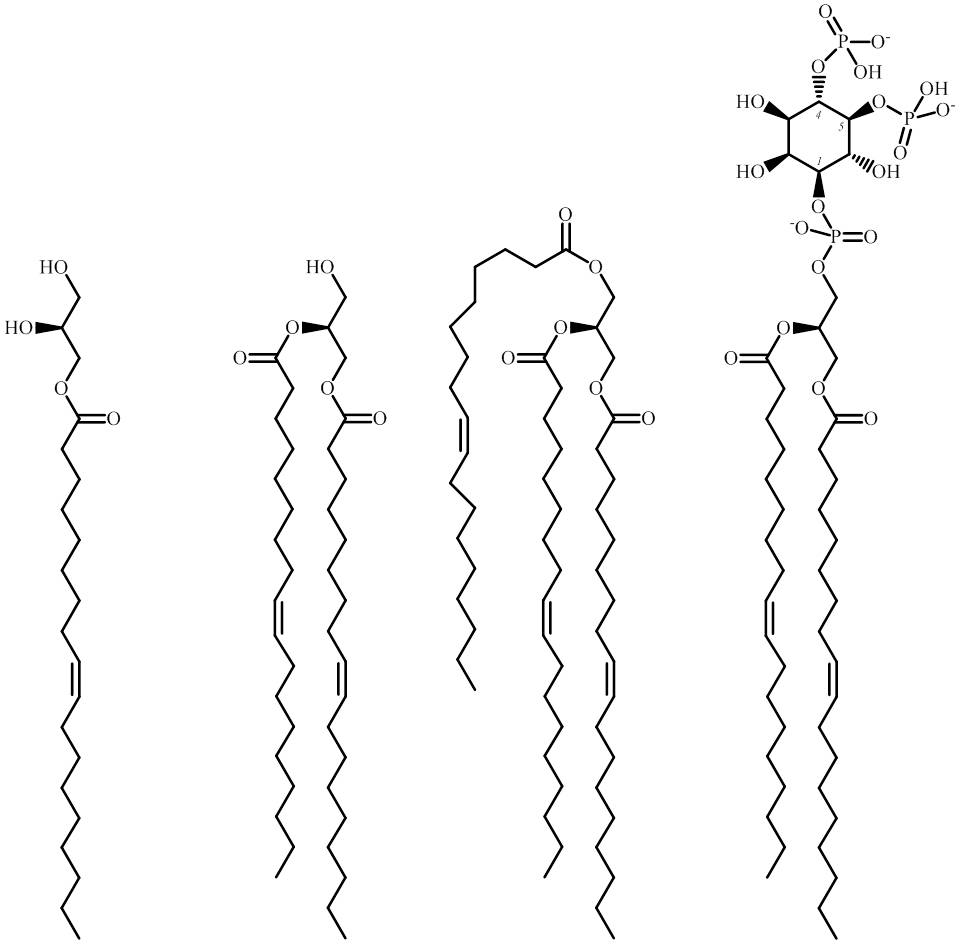
The first thing to know is that glycerides come in three different sorts: monoglycerides, diglycerides and triglycerides (Fig. 1). These are also sometimes called mono- di- and tri-acylglycerols, respectively.

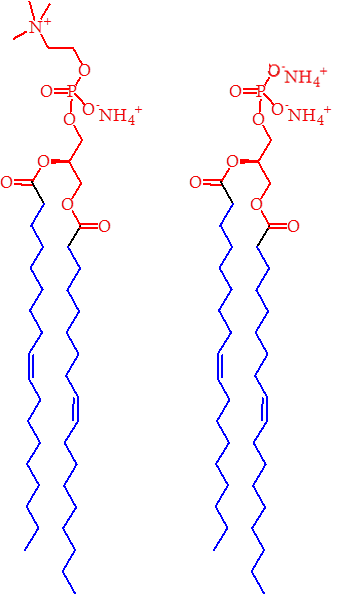
glycerides and PIP2

Fig. 1. Left to right: a monoglyceride, diglyceride, a triglyceride and PIP2.


The most common glycerides are probably triglycerides, so I will discuss those first. Triglycerides are fats or oils* but not lipids, as they are not amphiphilic. Be warned, though: plenty of people lump them in with lipids anyway. However, for the avoidance of doubt I shall continue to refer to them as fats if they are saturated (like the ones from butter or lard), or oils if they are unsaturated (like the ones from olive or sunflower oil). Whatever you call them, and however they are classified, one thing is not in doubt: triglycerides are the most concentrated way terrestrial life-forms have of storing energy. This energy store can be quantified, it stores 9 kcal/g. Energy can be stored as protein and carbohydrate, but this is never quite as concentrated as fats. Triglycerides have been found in pretty much every type of living organism yet discovered – certainly in plants, insects, fungi and animals. There is less need for bacterial and archaea species to store energy as higher life-forms do, so the quantities in evidence there are much lower.

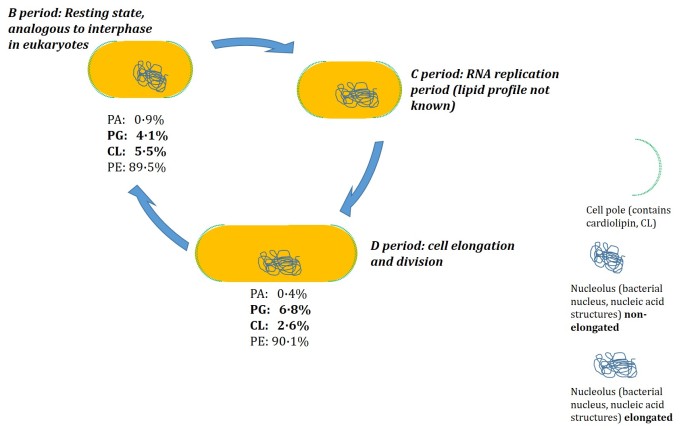
Monoglycerides are the least common of the three types in biological systems, and are often intermediates in the metabolism of triglycerides. They have some peculiar physical properties that have been explored in a number of research papers (others include this one and this one). What that work has shown, is that the sorts of lipids found in biological systems can adopt certain morphologies; in a sense, it has shown us what sorts of shapes and contortions are ‘possible’ with these types of lipid. This has implications for what we observe in the physical process of cell division, as data like this can allow us to identify the physical behaviour of individual lipids. This allows us to start the process of ‘who is doing what’ on a molecular level, during processes such as cell division.

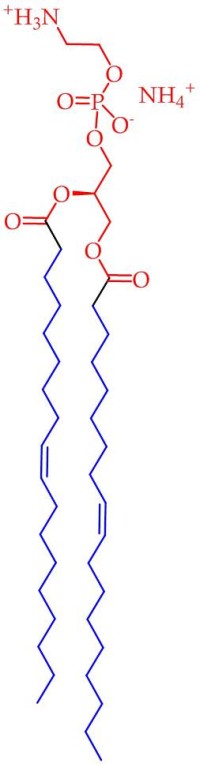
Diglycerides are perhaps the most interesting because they exist in nature as shown above and are also a building block for many other biological lipids. They are amphiphilic by virtue of the hydroxyl group (polar end) and the two fatty acid residues (lipophilic end). However, the polar end is not quite polar enough to make diglycerides self-assemble on contact with water, unless they are mixed with other lipids, like phosphatidylcholine (PC). This places diglycerides in a peculiar sort of physical purgatory, where they are not really lipids in the classical sense, but are not fats either. Cholesterol also falls into this category as it too forms part of a biological membrane, but will not form a membrane in its own.

Adding a simple phosphate group to a diglyceride turns it in to phosphatidic acid (PA). This will self-assemble on its own on contact with water, and is the simplest common phospholipid. Further chemical elaboration of PA gives rise to the majority of biological amphiphiles. One particularly interesting one I like is called PIP2. The full name for this particular lipid is phosphatidylinositol-4,5-bisphosphate. You can see that the name is built up from ‘phosphatidyl’ (referring to the PA part), ‘inositol’ because it contains an inositol structure, called an inositol moiety, and ‘bisphosphate’ because it contains two phosphates not joined to the glyceride. This lipid is special because it is not just part of the membrane, but also a signalling lipid. We know this for several reasons, one of which is that when it is hydrolysed (cut in half), it gives rise to two molecules that go on to have other functions.

PIP2 is hydrolysed into IP3 and a diglyceride. In cells, IP3 is the trigger for the release of calcium ions from intracellular storage. The effects of this are as varied as muscle contraction and some of the early events of fertilisation. Cell type is therefore important in knowing what this signal does.

The diglyceride activates an enzyme called PKC. This enzyme phosphorylates a number of other proteins, ensuring that they are ‘switched on’. This leads to a number of carefully controlled effects, including smooth muscle contraction in the digestive system, muscle contraction that causes ejaculation and the secretion of saliva, and aggregation of blood platelet cells. PKC also activates the proteins that are involved in neuronal activity in the brain.

This variety of bodily responses means that tight control mechanisms are required at a cellular level in order that the incorrect effect is not initiated**. The thing that strikes me about this is that the effects we observe of both the signalling molecules the come from PIP2, and the different glycerides, show just how closely our cells can control all of these molecular species – enough for us not to have any conscious idea that digestive, ejaculatory and neuronal effects are triggered by the same chemical process. Further, that such similar molecules can be both an energy storage facility and a means of digesting our food.

* The difference between fats and oils is that at room temperature, oils are liquids and fats are solids. This is related to the number of unsaturated bonds in the fatty acid residues.
** Some current research is focussed on what happens when such signalling goes wrong, and on how to treat this medically.

 A Raft of Concern About HIV Monday, Apr 1 2013 


Infectious diseases are an on-going concern in current medicine, with striking reports about viral infection in hospitals and concerns surrounding the threat of resistance to antibiotics.

Viral infection is powerful, as indicated by 1•8 million people dying every year of HIV/AIDS and 0•5 million per (non-pandemic) year from Influenza. About 34 million people have HIV/AIDS at present, with around 4 million people suffering from influenza each year.

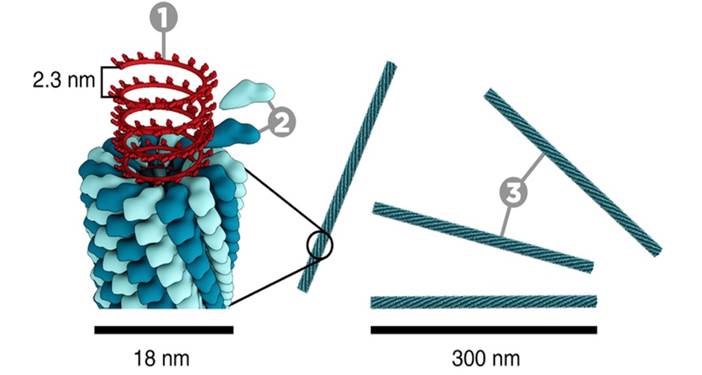
These scales of viral infection and death have generated a lot of medical and scientific interest. One area of exploration is the structure of the virions (also known as virons), the individual virus ‘particles’, a bit like the cells that make up a species of bacterium. Our current understanding of virion structure comes from a number of sources, and was started mainly by the work of scientists like Rosalind Franklin [1] and D. L. D. Caspar [2]. Their work showed that a limited range of proteins of a consistent shape fitted together to make a discrete virion such as the tobacco mosaic virus (Fig. 1). In these assemblies, a central core of DNA or RNA is protected and transported by a protein coat. This protein coat, called a capsid is made of individual protein blocks called capsomers.

Figure. 1.  The construction of the Tobacco Mosaic Virus (TMV).  1, DNA; 2, Coat proteins (‘capsomer’); 3, capsid.  Photograph courtesy of www.microbiologymadeeasy.com.

Figure. 1. The construction of the Tobacco Mosaic Virus (TMV). 1, DNA; 2, Coat proteins (‘capsomer’); 3, capsid. Photograph courtesy of www.microbiologymadeeasy.com.

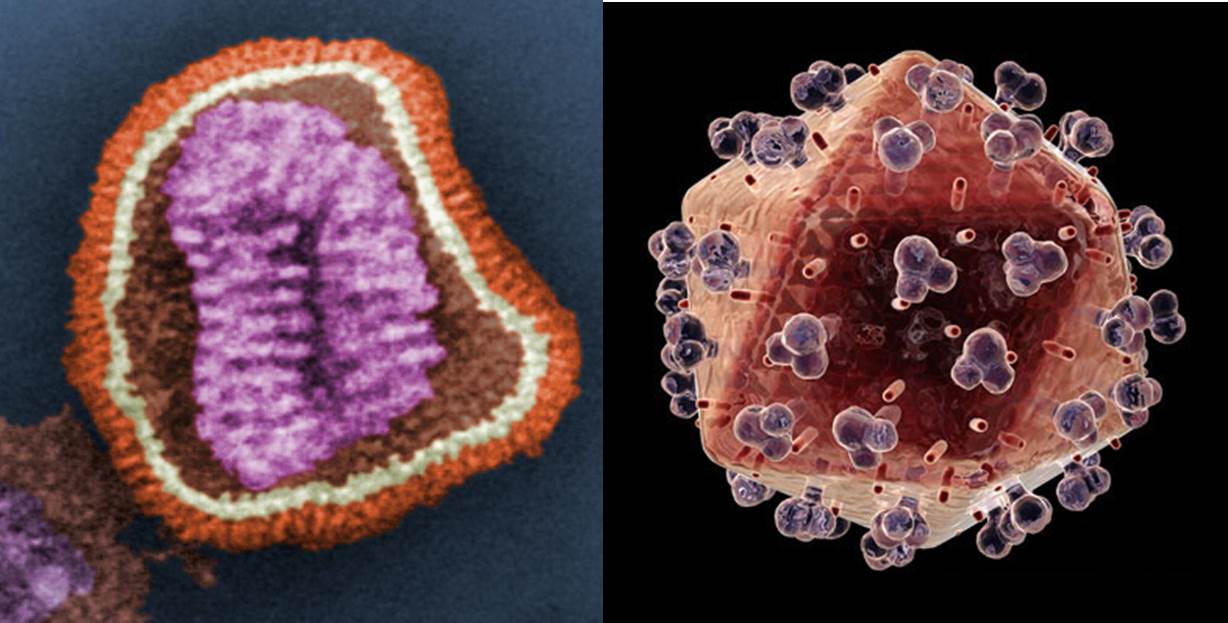
More recently, it has become clear that some viruses have evolved to include a lipid mono- or bi-layer. HIV and Influenza (Fig. 2) are examples of this. The existence of such a lipid bilayer in a virion means that the way it interacts with host cells is somewhat different to virions without a lipid membrane. Importantly, when a virion ‘finds’ a cell to infect, its lipid membrane merges with that of the host cell, inserting the DNA or RNA into the cytosol, the liquid medium inside a cell. Once the viral DNA or RNA has been replicated by the host cell, the virion leaves the cell taking with it a portion of the cell’s membrane. This is explained more fully here.

Influenza and HIV

Figure. 2. Left: coloured image of an Influenza virion; Right: coloured image of an HIV virion. The orange/ochre area of both the Influenza and HIV virions represents that of the lipid surface. Images courtesy of Wikimedia commons and www.topnews.in, respectively.

Such viral ‘budding’ has several interesting features. For example, if the virion needs proteins on its surface (the protruding blobs on the HIV virion, Fig. 2, are an example), those proteins need to be placed there somehow. This requires protein synthesis of the viral proteins by the cell’s machinery. More generally, the lipid profile of the viral membrane is not necessarily that of the cell. So, in order to bud, the virus is reliant on variation in local areas of the cell membrane that have the optimum lipid profile the viral membrane to be constructed.

The idea of a local collection of lipids for virus budding is not inconsistent with that of lipid rafts. There is some debate about how they arise in the context of viral budding, and it is not clear how much direction the virus has in the formation of such areas of local concentration. However, the evidence put forward by Brügger et al. [3] seems clear with respect to which lipids are present in HIV virions. Their work suggests that sphingomyelin lipids are particularly important. This identification of an important lipid for viral production is a valuable molecular target for understanding the behaviour of HIV and also has potential for an approach to HIV therapy. This helps us to understand the manner in which viral replication works.

References

[1] R. Franklin, Nature, 1956, 177, 928-930.
[2] D. L. D. Caspar, Nature, 1956, 177, 928.
[3] B. Brügger, B. Glass, P. Haberkant, I. Leibrecht, F. T. Wieland, H. G. Kräusslich, Proceedings of the National Academy of Sciences, 2005, 103, 2641-2646. www.pnas.org_cgi_doi_10.1073_pnas.0511136103


 Controlling stress Thursday, Mar 7 2013 


Membranes, like everything in cells, need to be controlled and maintained in order to behave in a way that means the individual can remain alive. There is nothing new in this observation, it is a widely-understood and observed process called homeostasis. However, understanding the controls that govern the homeostasis of physical barriers like the membranes of cells is at a much earlier stage.

Once recent development has come from a lab in Southampton, from a group of scientists who have used both lipidomic and physical analyses of the lipid fractions from eukaryotic cells to determine how the membranes of such cells may be managed [1]. One important consideration, and the focus of the study by Dymond et al. is the control of membrane stress.

This may sound trivial or at least a parameter one would assume was kept to a minimum, but rather like the power from a car engine, a certain amount of stress in the membrane is a useful thing. However, this stress is not sufficient to make the membrane bend out of shape spontaneously, and so is known as ‘stored curvature elastic stress’. Instead the stored stress means that when a membrane needs to bend, it can do so in an energetically favoured manner. Such bending processes are vital in the killing off of invading microbes by white blood cells, during the formation of vesicles for transporting neurotransmitters and for cell division.

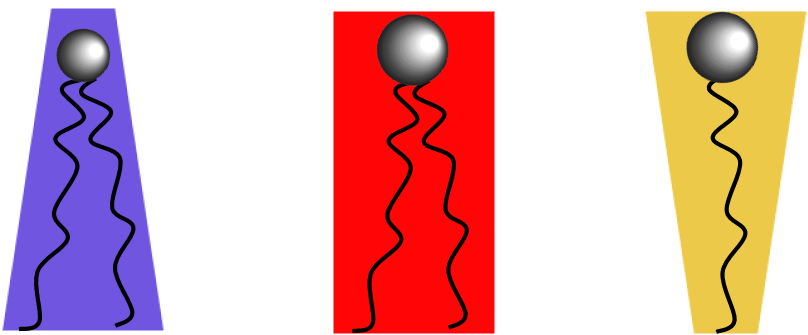
In order for the curvature elastic stress and the processes themselves to be controlled, the correct lipid building blocks are required. There is good evidence that the lipids present have a dominant influence on the curvature of the assemblies they form, and can even be divided up into ‘types’ on this basis. However, types 0, I and II (Figure 1) seem rather indistinct when we consider how slight curvature might be controlled. A hypothesis based on there being more than just these three types seems more plausible when we consider that lipidomics studies suggest that there are typically several hundred lipid species in even relatively small biological systems [2-5].


Lipid types

Figure 1. Left to right, a type II lipid, inverse cone,e.g.PE; a type 0 lipid, cylinder, e.g.PC; a type I lipid, a normal cone, e.g. lyso-PC.

This has led the Southampton group to research the possibility that there was a universal ‘pivot’ species, i.e., one in between those we currently term type 0 and type II, that appears consistently in all cell lines and growth conditions. The number of lipid species present meant that there were a number of possible candidates, although certain ones, like lyso-PC could be ruled out immediately.

The possible candidates for this pivot species were phosphatidic acid (PA) and phosphatidylethanolamine (PE), the structures of which are shown in Figure 2. The latter may seem an unlikely candidate for a pivot species as it is typically an example of a type II lipid, however, it requires 80% PE to deform a PC system to a type II surface (inverse hexagonal phase). As 80% makes PE the dominant species in that system, it seems reasonable that its power as a type II lipid is not particularly dominating, unlike that of inositide lipids [6,7]. A lipid that is type II in isolation might therefore produce stored curvature elastic stress when mixed with other lipids, especially as a component that is not a majority one.

PE and PA

Figure 2. The structures of PE (left) and PA (Right). The blue regions represent the lipophilic part of the lipids, with the red portions representing the hydrophilic parts. On this basis, the head group of PA appears to be smaller than that of PE, suggesting it too might be a type II lipid.

The possibility of a pivot species that is PA is therefore intriguing. It is normally a type 0 lipid, so in order for it to be a pivot species, it must acquire something recognisable as type II character, purely as a way of preventing it remaining simply a type 0 species. The structure of PA (Figure 2) suggests that it has a small and narrow head group, and so it is conceivable that under certain circumstances, that it might exhibit type II morphology (Figure 1), however Dymond et al. report that although this lipid demonstrates some of the character consistent with a pivot species, it does not exhibit the universality required to fit with a general observation. Thus, emphasis fell upon the universal pivot species being a PE lipid.

Some variety of fatty acid residues was also observed to influence the identity of the universal pivot lipid. Although this would be expected to influence only the temperatures at which phase transitions occur, this factor appears important as temperature itself is controlled homeostatically and it seems likely that the two must agree in order to give a stable system.

The natural progression for work such as this is to use it to assess the observations made about lipid compositions in different systems, for example in a comparison of the lipids in cellular membranes of people with obesity-onset diabetes [8].

It therefore seems clear that the presence of a universal pivot species is a useful means for probing both systems under normal, homeostatic conditions, but also for developing an understanding of the physical manifestation of disease, and thus inspire therapies as a result.

References
[1] M. K. Dymond, C. V. Hague, A. D. Postle, G. S. Attard, Journal of the Royal Society – Interface 2013 10, 20120854.
[2] S. Furse, S. Liddell, C. A. Ortori, H. Williams, D. C. Neylon, D. J. Scott, D. A. Barrett, D. A. Gray, Journal of Chemical Biology, 2013, doi:10.1007/s12154-012-0090-1.
[3] E. A. Dennis et al., Journal of Biological Chemistry, 2010, 285, 39976–39985. doi:10.1074/jbc.M110.182915
[4] C.S. Ejsing et al., Proceedings of the National Academy of Science, 2009, 106, 2136–2141. doi:10.1073/pnas.0811700106
[5] O. Quehenberger et al., Journal of Lipid Research, 2010, 51, 3299–3305. doi:10.1194/jlr.M009449
[6] S. Furse, N. J. Brooks, A. M. Seddon, Rudiger Woscholski, R. H. Templer, E. W. Tate, P. R. J. Gaffney and O. Ces, Soft matter, 2012, 8, 3090-3093. doi: 10.1039/c2sm07358g
[7] X. Mulet, R. H. Templer, R. Woscholski and O. Ces, Langmuir, 2008, 24, 8443–8447. doi: 10.1021/la801114n
[8] M. Younsi, D. Quilliot, N. Al-Makdissy, I. Delbachian, P. Drouin, M. Donner, O. Ziegler, Metabolism, 2002, 51, 1261-1268. doi:10.1053/meta.2002.35184

 Edelfosine: A Lipid with Applications in Cancer Friday, Feb 1 2013 


The uncontrolled growth of cells in a body is the traditional definition of cancer, and it remains relevant. The difficulty with tackling this disease in a clinical setting is being selective; we want to be able to kill off only the cancerous cells, and not healthy ones. Although there have been many successes in drug–based cancer treatment (cis-platin, taxol, etc), this remains one of the biggest challenges. With this in mind, several approaches are being researched, including semi-physical studies of the surfaces of cancer cells.

Czyz et al. [1] have shown that the introduction of a man-made lipid (known as ‘non-endogenous’) into living systems has several chemical, and presumably physical, effects. One claim they make is that one such non-endogenous lipid, edelfosine (see Figure), accumulates in the cellular and endoplasmic reticulum membranes. This is evidenced by the reorganisation of these parts of the cells. There is the suggestion that this reorganisation also occurs on a much more local scale, with particularly high concentrations of edelfosine in so called ‘lipid rafts’. However, with the theory of lipid rafts still being controversial (at least in living systems) it is unclear what foundation there is for that assertion.

Figure. The molecular structure of edelfosine.  Note the head group similarity to phosphatidylcholine and the hydrolyisis-resisting ether-linked fatty alkyl chain.

Figure. The molecular structure of edelfosine. Note the head group similarity to phosphatidylcholine and the hydrolyisis-resisting ether-linked fatty alkyl chain.

What is clear, is the chemical influence of this lipid. Through the use of a protein, called pHluorin, and shining light at the cells, the pH of the liquid medium inside the cells (called cytosol) could be determined [2]. The colour and intensity of the light re-emitted by this protein are a function of the concentration of hydrogen ions present. With appropriate calibration, this gives a good insight into the ionic environment inside the cell. What Czyz et al. found was that the intracellular environment becomes much more acidic soon after the lipid had been administered, which immediately begs the question of how this occurs on a molecular level. The suggestion is that the presence of edelfosine has a direct knock-on effect on the cellular machinery that controls the internal environment. This in turn leads to proteins being transported to the wrong parts of the cell, reducing its ability to control pH and prevent the system becoming acidic.

This impressive action of this lipid provides a useful entry into a cancer therapy because it is needed only in small amounts. Edelfosine disrupts an important cellular control mechanism, the falling apart of which leads ultimately to apoptosis.

Although it is not clear what side-effects there may be, or how good a cancer drug therapy this particular lipid will make clinically, the therapeutic approach of using a non-endogenous lipid that accumulates in and interrupts the biochemistry of the target cells, is a tantalizing one that is currently only in the early stages of research.

References

[1] O. Czyz, T. Bitew, A. Cuesta-Marbán, C. R. McMaster, F. Mollinedo, V. Zaremberg. Journal of Biological Chemistry, 2013, DOI: 10.1074/jbc.M112.425744.

[2] R. Orij, J. Postmus, A. Ter Beek, S. Brul, G. J. Smits, Microbiology, 2009, 155, 268-278.

 I’ve Forgotten Where I Left that Lipid… Saturday, Dec 1 2012 


You may have thought that enzymes that hydrolyse (break down) lipids, called lipases, would be a problem for a lot of biological systems. Although there are some obvious exceptions (digestion), this is often true (bacterial infection). However, research published recently suggests that a tightly controlled use of lipases can be very useful for maintaining the membranes and biological machinery that lipids comprise. There is already evidence that lipids that suffer oxidation can be recycled in ocular systems, but there is now evidence that this is type of ‘damage-repair’ occurs in a model gastropod central nervous system.

Watson et al. [1] have recently published evidence that suggests an enzyme called phospholipase A2 has an important influence on long-term memory. This enzyme is capable of hydrolysing one of the two fatty acids from lipids in the membranes of nerve cells that make up the neuronal circuits we need to think. What this means, is that it can remove unsaturated fatty acid residues that have been oxidised. This allows the damaged lipids to be removed such that those required for optimum cellular performance are in place.

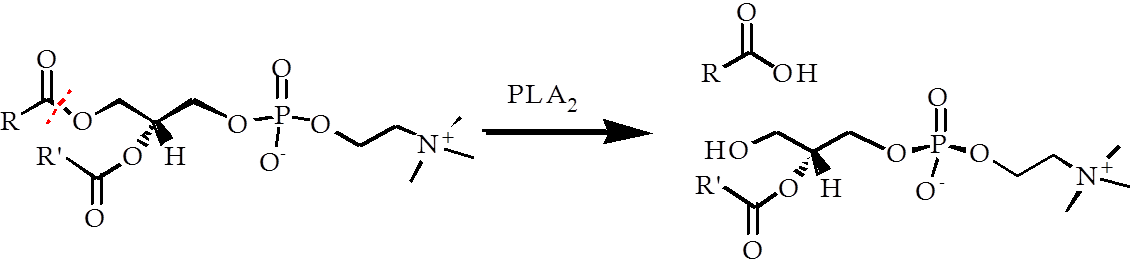
One of the earliest references to phospholipase A2 (PLA2) was published in the mid-1950s [2,3], and was in quite a different context. Work by Long and Perry [2,3] used a set of experiments that determined the structure of lecithin that had been exposed to PLA2 isolated from several types of snake venom (cobra, rattlesnake, moccasin). This work indicated that just one of the fatty acid residues was removed, and that it was the fatty acid from one hydroxyl position in particular (red dotted line, Fig. 1), regardless of the type of fatty acid that was present.

Figure 1. The action of a phospholipase 2 (PLA2) enzyme on a molecule of lecithin (phosphatidylcholine), giving lyso-lecithin and a fatty acid. The fatty acid on the primary hydroxyl is hydrolysed selectively. The R and R’ groups are alkyl chains that form part of the fatty acid residues.

The fact that this enzyme is present in several deadly snake venoms suggests that its activity is damaging, despite the change to the lipid molecule appearing to be partial with respect to the overall structure of the lipid (Fig. 1). It is perhaps not surprising therefore, that the change to the lipid brought about by PLA2 does give rise to a significant change in the physical properties of the lipid. Rather than forming normal, roughly flat lamellar bi-layers, as in a normal cell, this lipid drives an energetic change towards more curved lamellar surfaces, somewhat different to a typical cell. The general effect of this is clear and is observed as the ‘lysis’ (breaking-up) of the cells that the enzyme reaches. This type of enzyme, despite its apparent chemical specificity, can therefore have devastating consequences for the victim of a snake’s bite.

It is therefore something of a surprise that any animal system should evolve an endogenous enzyme for any such purpose. However, the evidence presented by Watson et al. suggests just that: the measured activity of PLA2s, that have specificity for lipids that have suffered damage by oxidation (called peroxidation or peroxidative damage), can be positively healthy. Their results show that systems in which the PLA2s are inhibited contribute to an organism showing signs of memory loss associated with ageing. This strongly indicates that the activity of the enzyme is linked to retaining long-term memory. Importantly, these observations about long-term memory are not consistent with the neuronal cell death that is typically associated with ageing. In the case of PLA2s, it is more a sort of switching-off, rather than an extinguishing of the effect of this enzyme.

So like the digitalis poison from foxgloves and opioids from poppies, it seems that a small, measured amount of yet another deadly poison can have beneficial effects. In the case of PLA2s, a long and healthy life is the reward.

References

[1] S. N. Watson, N. Wright, P. M. Hermann, W. C. Wildering, Neurobiology of Ageing, 2013, 34, 610-613.

[2] C. Long, I. F. Penny, Biochemical Journal, 1954, 58, R15.

[3] C. Long, I. F. Penny, Biochemical Journal, 1957, 65, 382-389


 Emulsions Thursday, Nov 1 2012 

It is impossible to mix oil and water.  On the face of it, it almost seems peculiar that anyone should want to take an interest beyond that.  There are any number of occasions when mixing oil and water is clearly unnecessary (in the fuel tank of a car), or even dangerous (chip pan fires should never be put out with water).  However, a few minutes’ worth of Googling suggests that there are at least as many reasons why it is useful to mix oil and water.  Mayonnaise, paint, milk and even the humble pork pie would all be quite impossible without the principle of being able to combine water and oil; without emulsions.

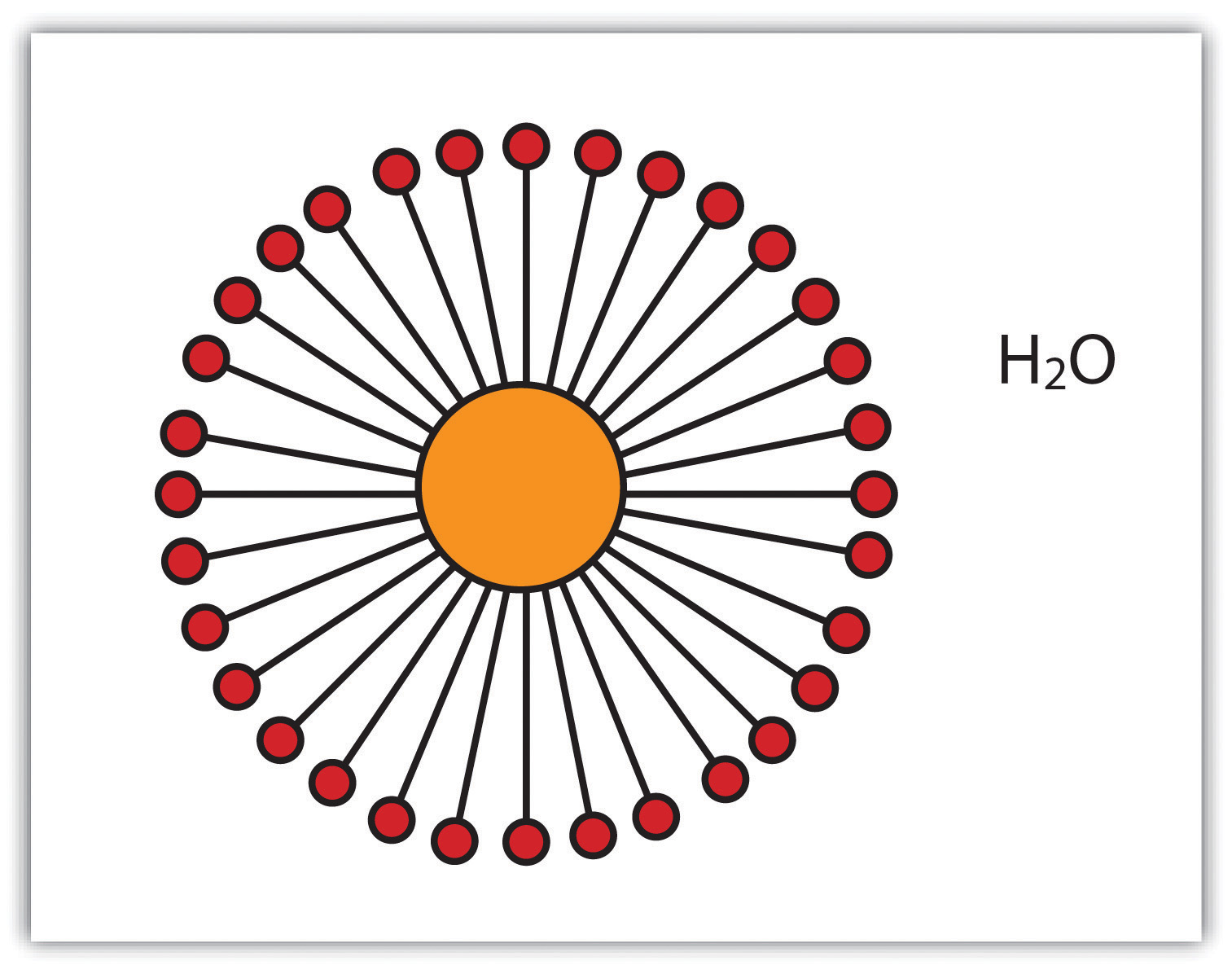
A droplet of fat (orange) surrounded by emulsifying amphiphiles. Photo copyright: flatworldknowledge.com.

The hidden ingredient in mayonnaise is the vinegar; most people know that it contains oil and egg, and sometimes even mustard powder, but watery vinegar is guessed less often.  The inclusion of both oil and vinegar is the main underlying physicochemical problem with this food: to make it, you need to mix oil and water into a homogenous fluid.  This requires a third agent: an emulsifier.  In this case the egg yolk and mustard powder are the emulsifiers.  All that is required is that the oil, vinegar, egg and mustard are mixed together in the correct proportions, and a mayonnaise is formed.  The egg’s yolk contains a variety of lipids that are capable of encapsulating globules of fat that can then be suspended in the mixture of water and vinegar.

Emulsions used in paint are a bit more complicated, requiring several ingredients to work properly.  They are also quite different to other types of paint, such as oil-based or acrylics).  Emulsion paint relies upon particles that are dissolved in a medium containing water and another, minor, solvent.  It is these solvents that evaporate when the paint dries, during which the particles polymerise to form the skin we know of as dry paint.  The emulsion has been used as a sort of vehicle, to deliver the material we wish to use to create an opaque, coloured film on a surface.  However, the emulsion is not completely lost, as not all of the water leaves the mixture.  The layer is still capable of taking on further water in more humid conditions (e.g., in a bathroom), meaning the film cast on the surface is susceptible to water damage.  Paints that are suitable for more humid environments include masonry and enamel paints, that are based on oily systems that are designed to provide a waterproof seal for a given surface.

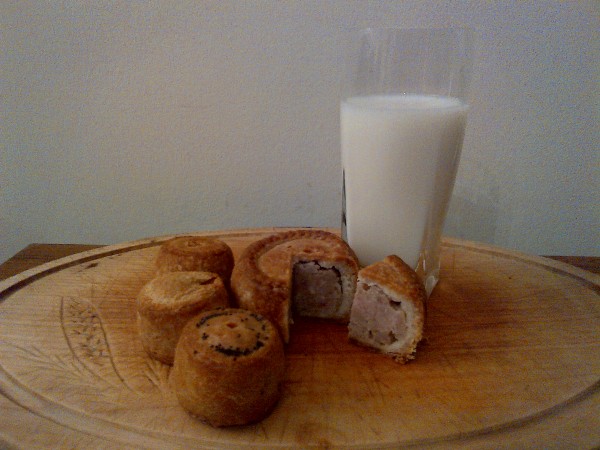
Pork Pies and Milk in front of a painted wall. How many emulsions are there?

Milk is a relatively simple and dilute emulsion, containing a mixture of fat, protein and water.  In this case, trace amounts of lipids, and milk proteins, are used to encapsulate the triglycerides (fat) that can then be suspended in the water.  It is therefore similar to mayonnaise in that amphiphilic species are used to create droplets that are then suspended in water.  However, milk uses amphiphilic proteins as well as lipids, whereas mayonnaise does not rely upon such proteins.

That just leaves us with the delicate matter of the pork pie.  This is really a fudge in terms of the basic principle of an emulsion, or rather, two fudges.  Firstly, the meaty part in the middle relies upon an emulsion so that the pork fat in it does not form unattractive blobs.  Secondly, the pastry relies upon a sort of emulsion in order to form an homogenous mixture.  The pastry requires the use of fat, partly because it was a useful source of energy in days gone by, but also so the pastry was edible.  The pastry made without fat in the middle ages was rather like stiff cardboard.  This was fine for keeping bugs and rodents off the meat, but was expensive and wasteful of flour.  This led to the accidental use of an emulsion for creating the pastry that holds it all together.  This is not uncommon in baking, batters and pastes are emulsions, nice and runny. Doughs are emulsions as well, but with fibrous protein in them.  If you fancy making an emulsion yourself, you might like to try one of James’ recipes from the final of the Great British Bake Off, for a Chiffon cake of a Union Jack (pp21).

 How Many Parents Does it Take to Change a Lipid? Sunday, Sep 30 2012 

How many parents does it take to change a lipid?  In some cases, it takes “three parents”.  Recent news in the British media has highlighted a debate about ethics in assisted conception.  The Human Fertilisation and Embryology Authority (HFEA) has initiated a consultation about the public response to what has been dubbed “3 parent IVF”.  This debate has been regarded as moot by informed scientists, as the “third parent” in this case provides no human DNA at all, but is a supply of healthy symbiotic organelles called mitochondria.  This procedure is thus equivalent to organ replacement, though it takes place at cellular level. This sort of intervention is well known as a serious undertaking, and begs the question of what sort of problems could require such an intervention. A surprising number are lipid-based.

The lipid basis for mitochondrial disease has far-reaching physical and metabolomic consequences as, unlike most organelles, the correct chemical activity of a mitochondrion relies upon not one but two plasma-type membranes. When we also consider that mitochondria are the organelles that all terrestrial organisms rely upon for releasing chemical energy from glucose, their function is clearly of paramount importance. Thus a fault with one or both of these membranes in the handful of mitochondria in the ovum at conception may give rise to profound effects in the resulting individual.

One such condition is called Barth Syndrome [1]. In this condition it appears that both the fatty acid composition and the amount of cardiolipin are abnormal in the inner mitochondrial membrane. This can deform and even destroy the bi-layer, rendering the mitochondrion useless for its normal function. In practice, this means that muscular function is compromised, especially in cardiac tissue. There are also a number of immunological effects surrounding a low bodily population of neutrophils – the cells used for managing infection. The severity of the symptoms has led to the formation of a number of support groups, such as the Barth Syndrome Foundation*.

Barth syndrome is an X chromosome disorder and is thus more common in males than females, as males possess only one X chromosome. In order for a female to display the condition, her mother would have to be a carrier or display the condition, and her father would also have to display the condition. A mutation of the X chromosome leading to the condition is observable on a molecular level by abnormalities in tafazzin. Tafazzin is an enzyme called an acyltransferase, meaning it is capable of transferring a fatty acid residue from one hydroxyl group to another, including between two individual lipid species. Recent work by Schlame et al. [2], suggests that this enzyme lacks specificity of lipid substrate, but is influenced by the topology of the membrane. This may limit its activity to only very small portions of the membrane (perhaps less than 1%), though in systems where tafazzin is defective, the small areas in which the topology is undesirable for the organelle (and thus the cell) are not corrected. On a general (clinical) level, this means that chemical energy (glucose) is not converted to mechanical energy efficiently. Under normal circumstances, tafazzin helps manage the inner mitochondrial membrane in order that it maintains the correct topology and permeability.

There is also evidence that better-known conditions such as Myalgic Encephalitis (M.E., also known as chronic fatigue syndrome) and type II diabetes may be either directed or mediated by lipid damage or abnormality in mitochondria. Nicholson and Ellithorpe have presented evidence that the dietary application of fresh lipids and anti-oxidants to human patients with Myalgic Encephalitis reduces their symptoms; however it is not clear how these clinical trials were conducted. Perhaps more reliably, a comprehensive body of research now suggests that mitochondrial dysfunction is a factor in the insulin resistance that defines type II diabetes [3]. Notably type II diabetes is associated with older people, and so it is not until other factors that weaken mitochondrial function have had time to take hold, that symptoms associated with insulin resistance are observed. Thus, the occurrence of such conditions in the offspring of child-bearing age adults is not predictable without a comprehensive medical history. The direct female line of the potential offspring is especially important in this as this is the source of the mitochondria.

The fact that mitochondrial disease can be the result of both genetic and dietary problems should alert us to the global significance of this set of conditions. Undoubtedly a variety of approaches is needed to manage the problems involved, but we should be aware that individuals affected by such conditions may be preyed on for the sale of quack ‘cures’, if there are not readily-available and effective treatments that have been soundly tested in a clinical setting.


*This page is not intended as a scientific reference but for public/charitable bodies relevant to this condition.

References

[1] P.G. Barth, H.R. Scholte, J.A. Berden, J.M. Van Der Klei-Van Moorsel, I.E.M. Luyt-Houwen, E.Th. Van’T Veer-Korthof, J.J. Van Der Harten, M.A. Sobotka-Plojhar, Journal of the Neurological Sciences, 1983, 62, 327-355.

[2] M. Schlame, D. Acehan, B. Berno, Y. Xu, S. Valvo, M. Ren, D. L. Stokes, R. M. Epand, Nature Chemical Biology, 2012, 8, 862–869.

[3] J. Kim, Y. Wei and J. R. Sowers, Circulation Research, 2008, 102, 401-414.


 A Cellular Problem in Water Purity Sunday, Sep 2 2012 

We need water. It seems not only a basic, but an obvious and easily available thing to pretty much anyone in the first world. It is even listed as a human right by the UN. However, with fresh water being a distinct minority in the global water total, and unevenly spread with respect to human populations, a variety of questions are raised about what may be done to secure the future of water supply and processing. Not least to how toilet design has, and perhaps should, evolve.

And while the apparently uneven distribution of clean water is undramatic for a lot of people, it belies a rather obvious and serious set of questions: one of them concerns processing water, but another concerns testing water to demonstrate whether it is clean at all.

A given body of water may look and smell safe, but how safe it is microbiologically is not necessarily clear. A variety of water-borne diseases blight various parts of the world (cholera, Dengue fever, bilharzia, polio and too many more to mention) and many of these regions do not have suitable facilities for examining water supplies.

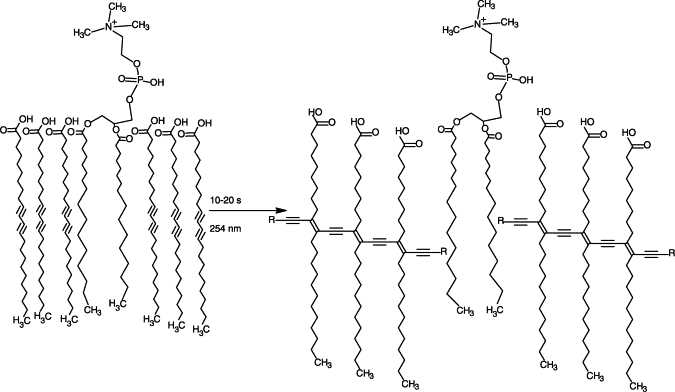
This leaves a gap in the market for a method of testing water that is reliable, simple and transportable. One ingenious method, towards which Villalobos et al. [1] have made significant steps in their research, involves the polymerisation of a lipid called TRCDA.

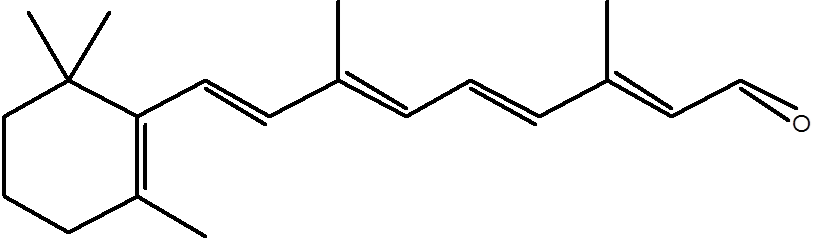
Applying ultra-violet light to water containing TRCDA and live pathogenic species gives rise to a polymerisation reaction between the TRCDA molecules (Figure 1) that in turn results in a colour change from blue to red. The emission of the red colour is proportional to the presence of the number of such species and falls within the visible range so can be observed with the naked eye. It is also possible to make a quantitative measure of the change using a visible light detector similar to that in long-established techniques like immunosuppressant assays and chromophore-detection MS.  The latter is possible because the polymerisation reaction gives a conjugated unsaturated system not dissimilar to that found in red- and orange-coloured vitamins.

Figure 1. When TRCDA (three molecules either side of the phosphorus-containing lipid present) is treated with ultra-violet light for only a few seconds, a polymerisation reaction occurs that gives rise to a clear colour change. The polymerisation reaction gives a conjugated unsaturated system not dissimilar to that found in red- and orange-coloured vitamins. Diagram courtesy of [2].

However, chemical techniques such as this are inevitably sensitive to interference, with issues surrounding the presence of metal cations (calcium, magnesium etc.) that are common in clean drinking water, as well as pH and temperature fluctuation[3,4]. Villalobos et al. have also sought to work around this problem with a more rigorous method development, including the inclusion of a well-established chemical method of removing metal ions, by chelation with an agent called EDTA.

The use of a technique based upon TRCDA also offers scope for investigating the bacterial presence in foods; however the methods have not yet been developed to do so, and significant challenges remain for that application. For example, some methods use a Phage to detect and control bacteria present in foods, something not compatible with a measure of the presence of all pathogens [5].

Despite this, the scope of this system remains strong, especially in situations where interference from other contaminants (such as metal ions) will be low. Surely a commercial format of this method is within reach?


References

[1] P. Villalobos, M. I. Chávez, Y. Olguín, E. Sánchez, E. Valdés, R. Galindo, M. E. Young, Electronic Journal of Biotechnology, 2011, 15, article 5.

[2] C. Valenta, A. Steininger, B. G. Auner, European Journal of Pharmaceutics and Biopharmaceutics, 2004, 57, 329–336.

[3] N. Charoenthai, T. Pattanatornchai, S. Wacharasindhu, M. Sukwattanasinitt, R. Traiphol, Journal of Colloid and Interface Science, 2011, 360, 565.

[4] M. A. Reppy, B. A. Pindzola, Chemical Communications, 2007, 4317-4338

[5] C. E. D. Rees, C. E. R. Dodd, Advances in Applied Microbiology, 2006, 59, 159-186.
 

 Life-Giving Bubbles Monday, Jul 9 2012 

Imagine you are a surgeon performing an operation to repair a patient’s injured pulmonary vein. Damage to this vein is a real problem for the body, as it interferes with how oxygenated blood is circulated around the body. Something happens during the procedure; the oxygen saturation, that is the amount of oxygen in the blood drops dramatically. Blood is still circulating, but the patient is rapidly heading for hypoxaemia – the state of too little oxygen in the blood for survival. What do you do?

There are a variety of causes and cases of death due to hypoxaemia each year. Injury to the pulmonary artery can be one, and victims of this include Princess Diana. Similarly, weakness of the connective tissue in arteries near the heart, where blood pressure is highest, can give rise to what is known as an aneurysm – a ballooning of the vessel. Earlier this year, a horse called Arcadius suffered fatal damage to his pulmonary artery after a race in America, for just this reason.

This type of injury or event leaves medical and surgical staff with at least two problems to sort out. One is to repair the physical problem, such as a tear in the pulmonary artery; the other is to keep the patient alive for long enough to perform the procedure. The latter requires a managed supply of oxygen into the blood. Although in theory there are large machines that can do this, they are not easily transported and getting a patient on to them during a trauma is not trivial. Thinking laterally, it is much better to be able to put oxygen into the system intravenously. The problem is that oxygen is a gas and it is not possible to just stick a gas into a vein. Giving a lot of saline with oxygen dissolved in it does not work either – it is not possible to dissolve enough oxygen, and such a large volume of saline would be necessary result in a huge increase in the volume of blood, with a decrease in the concentration of erythrocytes (red blood cells).

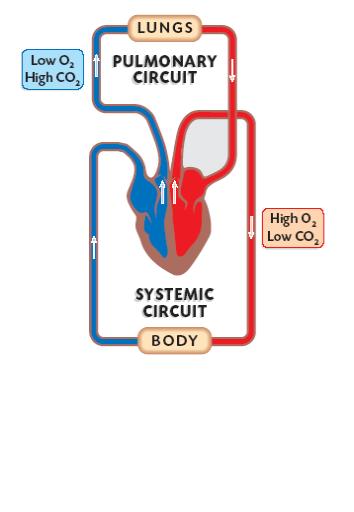
Figure 1, Double circulation, as in mammals. Oxygenated blood leaves the left ventricle (shown above on the right), flows into the aorta, through the body (the systemic circuit), into the right side of the heart (shown on the left) as deoxygenated blood, which is then pumped to the lungs for re-oxygenation, through the pulmonary circuit. Photo from leavingbio.net

So, what is required is a liquid in which a disproportionate amount of oxygen is contained. In principle, a small but oxygen-rich volume of liquid would not only have the desired effect but would also be quite portable [1]. An exciting development from the Harvard Medical School suggests an exciting possibility to this end: “oxygen-filled microparticles”. This idea has been tested and published by Kheir et al. [2]. What they have developed is a kind of lipid-based system in which pure oxygen gas is kept in bubbles, like vesicles, that are themselves suspended in an aqueous solution and that can be injected directly into the blood stream.

A particular advantage of this development is that because a lot of the volume of the material is a gas, it is used up rapidly. When the gas diffuses out of the vesicles and into the erythrocytes, where it is used up in metabolic processes, the effective volume added is as low as 10-15% of the volume of the original solution. The viscosity of the prepared solution must match that of the blood into which it goes, in order that it disperses properly when it reaches it [2]. However, the physics of this system have not yet been investigated.

In order to work, the gas must of course diffuse across the lipid mono/bilayer. It is not yet clear precisely what effect the components of the surface of these particles (either lipids or proteins) might have. What has been observed in this work is that certain combinations of lipids and proteins are less favourable than others. Systems containing the lipid PE were observed to be much less stable than those containing phosphatidylcholine (PC). PE is known to induce a much higher degree of membrane stress than PC, and so it may be worth investigating the effect of curvature elastic stress on the gas diffusion across this barrier.

The effect(s) of curvature elastic stress on this system, which is undoubtedly mediated by the presence of proteins [3,4] provides an excellent opportunity for tuning the system to cope with the shortfalls of the model proposed. For example, the system proposed by Kheir et al. [2] is not quite as efficient as would be required, in order to allow sufficient time for surgical intervention. There are also concerns about the possible toxicity of components, and so anything that could minimise their use is obviously a benefit.

Despite these avenues for further research, and the improvements required for commercial and widespread use, the principle that has been established is an important one. It seems clear that life-supporting amounts of oxygen can be injected into a living mammalian body. If such a facility were to become widely available, in the way that defibrillators have become in recent years, it seems inevitable that lives will be saved as a result.

References

[1] R. C. Koehler, Science Translational Medicine, 2012, 4, 140fs21.
[2] J. N. Kheir, L. A. Scharp, M. A. Borden, E. J. Swanson, A. Loxley, J. H. Reese, K. J. Black, L. A. Velazquez, L. M. Thomson, B. K. Walsh, K. E. Mullen, D. A. Graham, M. W. Lawlor, C. Brugnara, D. C. Bell and F. X. McGowan, Science Translational Medicine, 2012, 4, 140ra88.
[3] G.C. Shearman, G.S. Attard, A.N. Hunt, S. Jackowski, M. Baciu, S.C. Sebai, X. Mulet, J.A. Clarke, R.V. Law, C. Plisson, C.A. Parker, A. Gee, O. Ces and R.H. Templer, Biochemical Society Transactions , 2007, 35, 498-501.
[4] W. M. Henne, H. M. Kent, M. G. J. Ford, B. G. Hegde, O. Daumke, P. J. G. Butler, R. Mittal, R. Langen, P. R. Evans, H. T. McMahon, Structure, 2007, 15, 839-852. See also Pykäläinen et al. Nature Structural & Molecular Biology, 2011, 18, 902–907 and Dawson et al., Trends in Cell Biology, 2006, 16, 493-498.

 Lipid Rafts and a Possible Cure for Cancer That Could Go Viral Friday, Jun 1 2012 

Every discipline, every area of expertise, has its controversial topics. The lipid specialists are no exception. The topic that divides them is the theory of lipid rafts.

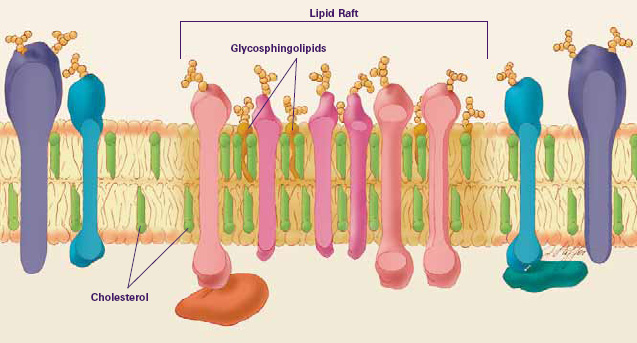
Schematic of a lipid raft, from the perspective of a cross-section of the cellular membrane. Diagram from the (American) National Institute of General Medical Sciences.

Since it became clear that a variety of lipids are present in cellular membranes, investigations about how these are arranged have been undertaken.  One face of this approach is to understand the full gamut of lipids in the system (lipidomics), and the other is a physical analysis of the behaviour of the system.  These two angles of understanding have increased in depth, with physical studies looking to solve the problem using a variety of experiments, many of which are based on X-ray scattering [1-3] or Nuclear Magnetic Resonance (NMR) [2,4]. These sorts of studies have found a variety of complexities in biological systems comprising a large number of lipid components that are not observed in model systems, that typically comprise many fewer).  Some of these variations have been identified as inhomogeneities in the membranes under study.  Such inhomogeneities are often observed by variations in the phase behaviour of smaller parts of the system.  This concept is taken a stage further with the theory of lipid rafts in that there are small, local areas that have a dissimilar lipid composition to the membrane that surrounds it, leading to the different phase behaviour.  There is also evidence that cholesterol in the membrane can influence this phase behaviour [2].

The idea of small areas of different lipid composition to the cellular average may sound unremarkable, but it can also be used to explain differences in protein activity with respect to lipid composition [5].  Certainly, there are examples of changes to protein activity as a result of changes in lipid composition that cannot be explained on purely biological grounds [6].  Despite that, data from a recent biological study in cancerous cells indicates that certain target proteins are located in lipid rafts [5].  One such protein is called prohibitin (PHB). This is activated by another protein, a kinase called PI3K. This is a protein responsible for installing a phosphate group – a process called phosphorylation.  However, the effect of this PI3K can be suppressed by the presence of a protein called rVP1. This is especially useful, because it has been shown that application of this protein induces cell death (apoptosis) in cervical cancer cells.

rVP1 was first discovered from a seemingly unlikely source: it is one of the four types of protein found in the Food and Mouth Disease virus, Aphthovirus. Its precise action in suppressing phosphorylation of PHB is unclear, however there is evidence that it reduces the amount of phosphatidylinositol-3,4,5-tris-phosphate (PIP3, another lipid), an important signalling lipid that requires three phosphorylations to be produced from phosphatidylinositol.  Evidence also suggests that rVPI can reduce the phosphorylation-mediated activity of other proteins in vivo [5].  Additionally, changes to the inositide profile of the membrane’s lipid fraction may have a purely physical influence on the behaviour of that membrane [3, 7].

The study by Chiu et al. [5] suggests there is a complicated set of interactions between lipids and proteins, both in biological terms, though signalling mechanisms, and by the physical behaviour of the systems.  rVP1’s action can easily be seen as an exciting possibility for cancer therapy, but also as a note of caution when we interpret the data as showing that a single molecule (rVP1) can have serious effects, both biologically and physically, and that occur simultaneously.


References
[1] F. Evers, C. Jeworrek, K. Weise , M. Tolan, R. Winter, Soft Matter, 2012, 8, 2170-2175.
[2] D. L. Gater, J. M. Seddon, R. V. Law, Soft Matter, 2008, 4, 263-267.
[3] S. Furse, N. J. Brooks, A. M. Seddon, R. Woscholski, R. H. Templer, E. W. Tate, P. R. J. Gaffney, O. Ces, Soft Matter, 2012, 8, 3090-3093, DOI: 10.1039/c2sm07358g.
[4] J. A. Clarke, J. M. Seddon, R. V. Law, Soft Matter, 2009, 5, 369-378.
[5] C. F. Chiu, J. M. Peng, S. W. Hung, C. M. Liang, S. M. Liang, Cancer Letters, 2012, 320, 205-214.
[6] M. Younsi, D. Quilliot, N. Al-Makdissy, I. Delbachian, P. Drouin, M. Donner, O. Ziegler; Metabolism, 2002, 51, 1261-1268.
[7] X. Mulet, R. H. Templer, R. Woscholski, O. Ces, Langmuir, 2008, 24 , 8443–8447. http://pubs.acs.org/doi/abs/10.1021/la801114n.

Next Page »